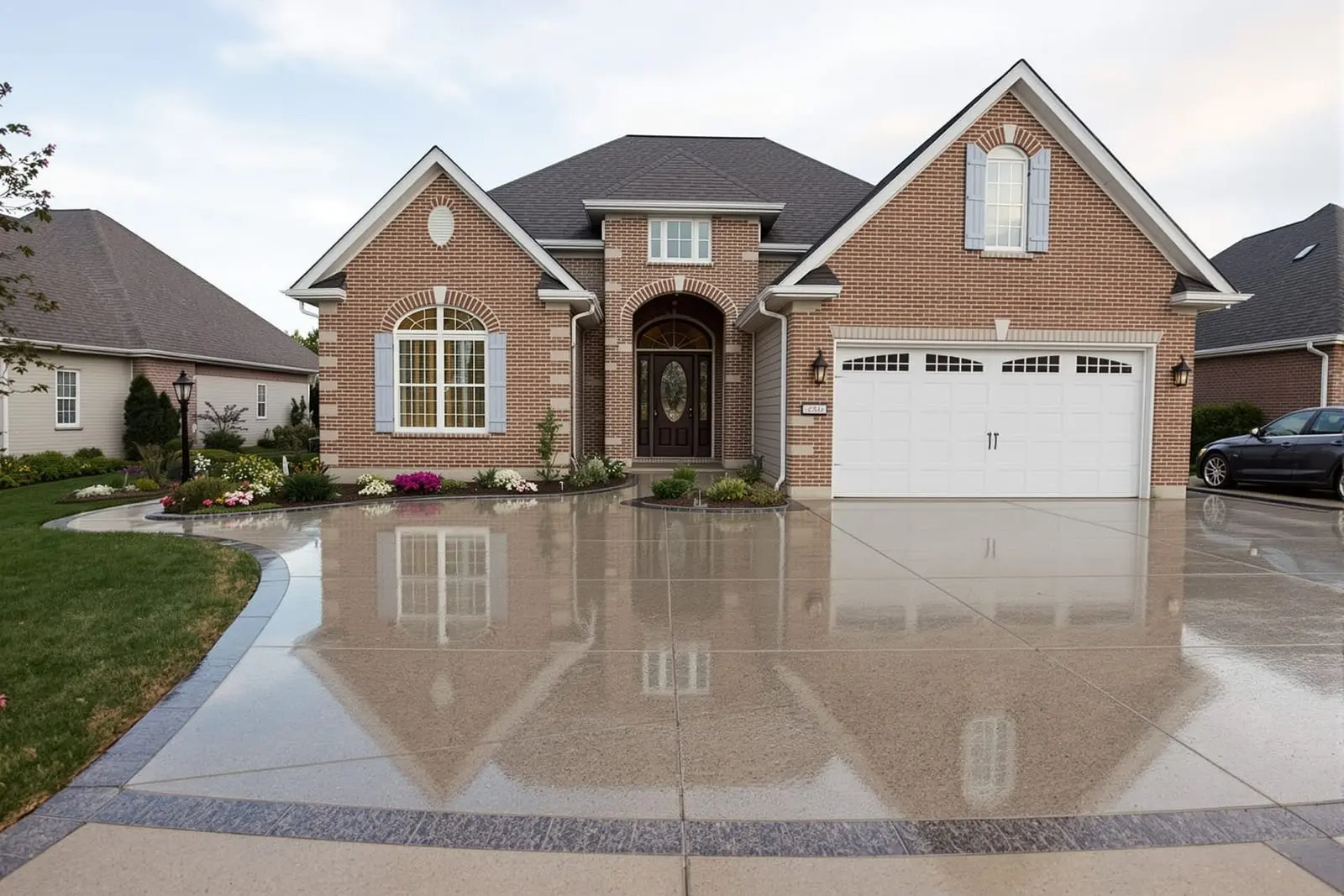
Add style to your outdoor surfaces with stamped concrete in Grand Rapids, MI. We install decorative concrete that mimics stone, brick, or pavers with custom colors and patterns. Our team carefully stamps and seals each project so it stands up to traffic and weather. Transform plain gray slabs into attractive focal points around your home.
Primetime Concrete Grand Rapids provides professional stamped concrete throughout Grand Rapids, MI and the surrounding area. Our licensed, insured crew delivers safe, clean, on-time work with a free estimate before anything begins. Call (231) 888-1647 or request your free quote.
Stamped concrete that fits Grand Rapids homes and weather
Stamped and decorative concrete lets you get the high-end look of brick, stone, or pavers with the strength and low maintenance of a continuous concrete slab. At Primetime Concrete Grand Rapids, we design each stamped concrete project around how you actually use your space and how our West Michigan climate really behaves.
In Grand Rapids, freeze-thaw cycles are the big enemy of poorly installed concrete. That is why we focus first on the base and mix before we ever talk about patterns. For outdoor patios, driveways, and walks, we use a compacted gravel base at the right thickness for our local soils, then a mix designed for Michigan winters with air entrainment to resist freeze-thaw damage. This foundation work is what keeps stamped patios from settling or popping over time.
Customers often ask when to schedule stamped concrete. Locally, the best window is usually late April through early November, with May, June, and September being ideal. Temperatures are mild enough for proper curing, and we can control finishing better without the extremes of July heat or early spring frost. We do pour outside those months when conditions cooperate, but we will always be upfront about whether the forecast is safe for decorative work that needs to both look great and last.
Because stamped concrete is visible and permanent, we spend extra time up front on layout. On site, we look at sun angles, drainage patterns, and how you move through the yard. For instance, in a Heritage Hill backyard with mature trees, we may shift a patio a foot or two to avoid heavy root zones and future trip hazards, then tie the design into existing brick or stone on the home so the stamped pattern feels like it belongs rather than looking bolted on.
How our stamped concrete process works, step by step
Stamped and decorative concrete is more than just pressing a mat into wet concrete. A clean, consistent process is what makes the difference between a patio that looks sharp for years and one that disappoints after the first winter.
1. Design and planning: We start with measurements, grades, and photos of your existing house and landscape. Together, we pick pattern, texture, and color, but we also talk about practical details like shovel-friendliness if you plan to clear snow, or traction if the surface might get icy.
2. Base preparation: We remove sod or old concrete, excavate to the correct depth, then install and compact a gravel base. In many Grand Rapids yards, clay pockets hold water, so we often add a bit of extra base thickness and sometimes a drain tile or subtle slope to keep water moving away from the house and from low spots where ice would form.
3. Forms and reinforcement: We set forms to establish the exact shape, steps, and edges, and we check elevations against door thresholds and existing walks. Reinforcement (rebar or wire mesh) is added where it belongs, especially on driveways and hot tub pads, to control cracking.
4. Pouring and coloring: We pour the concrete and add integral color, a shake-on hardener, or a combination, depending on the finish you want. Integral color runs through the entire slab and is great for high-traffic areas. Shake-on color hardener intensifies the surface color and adds extra surface strength, which is useful for driveways and busy patios.
5. Stamping and detail work: Once the concrete reaches the right firmness (firm enough to hold a pattern, soft enough to accept the imprint), we apply a release agent and lay down the stamping mats in a planned sequence so the pattern stays straight and natural. We hand-detail borders, corners, and tight spots with specialty tools so you do not see awkward half-stones or obvious repeats.
6. Curing and sealing: We let the slab cure properly, then clean and seal it to lock in color and enhance the texture. The sealer also helps resist salt, spilled drinks, and staining. In Grand Rapids, we recommend a reseal about every 2 to 3 years, and we can set you up on a simple maintenance schedule if you prefer not to think about it.
Patterns, colors, and finishes that work in West Michigan
Primetime Concrete Grand Rapids offers a range of stamped and decorative concrete looks that feel at home in our area, from classic brick around older Grand Rapids homes to more modern finishes in newer neighborhoods.
Popular patterns here include ashlar slate, worn plank wood, cobblestone, and seamless stone textures. Around traditional homes in East Grand Rapids or Alger Heights, we often install brick or cobblestone borders with a slate or stone field to echo existing masonry. In newer developments in areas like Cascade or Walker, clients tend to choose cleaner plank or large-format stone patterns that pair well with contemporary siding and large windows.
Color choices are just as important as pattern. We see two main directions among local customers:
• Natural stone tones: Grays, charcoals, and subtle browns that mimic limestone or bluestone. These work well with brick and neutral siding and do not show dirt easily.
• Warm, wood-inspired tones: Browns and tans in a wood plank stamp look great around composite decks and fire pits and offer the feel of wood without rot or splinters.
We often use two or three color components on a single project: an integral base color, a contrasting color release that settles into the grooves for depth, and sometimes a tinted sealer for fine-tuning. This layered approach gives stamped concrete a more natural look and helps avoid a flat, painted feel.
If you are not sure what will look right, we can walk you through projects we have done in different Grand Rapids neighborhoods and show how colors and patterns age over several winters. Seeing how a five-year-old patio looks after snow, salt, and summer sun often helps clients decide between bolder or more neutral tones.
Costs, common issues, and how we avoid problems
Stamped concrete pricing in Grand Rapids depends on several real factors, not just square footage. When Primetime Concrete Grand Rapids prepares a quote, we look at:
• Access: Tight side yards, limited truck access, or a lot of hand-carrying material can add labor.
• Site conditions: Extra excavation, removing old concrete, or dealing with poor drainage adds time and material.
• Pattern complexity: Multi-pattern layouts, borders, or custom saw cuts take more labor than a simple repeated pattern.
• Color system: Integral color alone costs less than using color hardener plus multiple release colors and decorative saw cuts.
We will spell out what is driving your price and where you have options to save money without hurting durability. For example, a homeowner might choose a simpler field pattern with a decorative border to get a high-end look without upgrading the entire surface.
Stamped concrete does come with common issues when it is not installed or maintained correctly. Hairline cracking can occur in any concrete, so we plan control joints and reinforcement to direct where movement happens. Scaling or flaking in our climate is often tied to poor sealing or heavy use of deicing salts. We use air-entrained mixes, finish the surface correctly, and recommend using sand or pet-friendly alternatives instead of aggressive salts whenever possible.
Color mismatches between slabs can appear if a project is poured on different days or with inconsistent mixing. When we know a driveway or large patio might need multiple pours because of size or access, we pre-plan pour breaks at natural lines, such as control joints or borders, and we batch color consistently so everything blends.
We also talk openly about slip resistance. A fresh sealer can get slick, especially with certain textures and Michigan ice. To combat that, we can add a fine traction additive to the sealer, especially on walkways, entries, or pool decks, to keep the surface safer without sacrificing appearance.
What Grand Rapids homeowners should know before hiring
Before you choose any stamped concrete contractor, there are a few local-specific questions that can protect your investment.
Ask how they design for freeze-thaw and drainage in Kent County soils. A pretty stamp job will still fail early if the base is wrong or water sits against your foundation. At Primetime Concrete Grand Rapids, we check slopes to your yard and gutters and we are honest when a small change in layout can save you future headaches.
Find out what mix design and reinforcement they use for different applications. A light reinforcement grid that might be acceptable for a small garden walk is not enough under the weight of trucks in a Grand Rapids alley or mobile equipment that might cross your drive.
Request details on their stamping and coloring system. You should hear specific products and steps, not vague references. We are always happy to explain which color system we recommend for your project and why, based on sun exposure, traffic, and whether you plan to use deicing products.
Timing also matters. Good contractors will work around West Michigan weather instead of forcing a decorative pour on the wrong day. We would rather reschedule a stamp job than risk surface problems from unexpected rain, early frost, or high heat and wind. You should always know how weather delays will be handled and what that means for your project timeline.
Finally, ask about maintenance. Stamped and decorative concrete is low maintenance compared to pavers or wood, but it is not zero maintenance. A clear plan for cleaning and resealing will keep colors rich and surfaces protected. When we finish a job, we leave you with simple written care guidelines that are realistic for our local climate, including how to handle snow removal, safe cleaning products, and when to consider a reseal.
If you are in or around Grand Rapids and considering stamped concrete for a new patio, driveway, walk, or pool deck, we are happy to walk the space with you, talk through options in plain language, and put together a clear, detailed proposal so you know exactly what you are getting.
“
Professional stamped & decorative concrete, done right the first time, quality materials, honest pricing, and results that last.
Primetime Concrete Grand Rapids
Stamped & Decorative Concrete Across Our Service Area