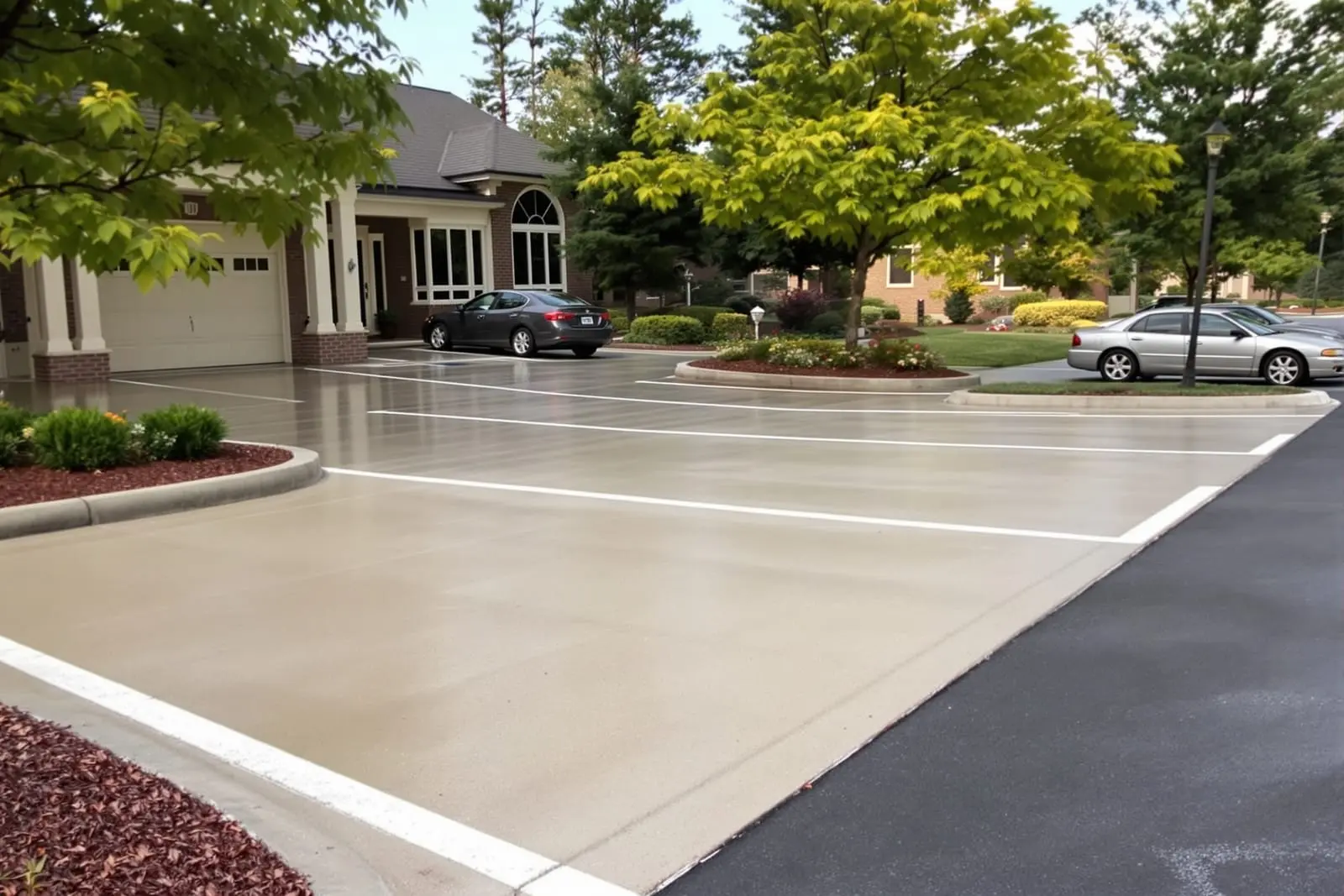
Get a long lasting concrete parking lot in Grand Rapids, MI that handles heavy vehicles and harsh weather. We design thickness, reinforcement, and joint layouts for your traffic needs. Our team pours and finishes commercial parking areas with clear markings and smooth entries for drivers and pedestrians.
Primetime Concrete Grand Rapids provides professional concrete parking lot throughout Grand Rapids, MI and the surrounding area. Our licensed, insured crew delivers safe, clean, on-time work with a free estimate before anything begins. Call (231) 888-1647 or request your free quote.
Concrete Parking Lots Built for Grand Rapids Conditions
A concrete parking lot is a long term investment, and in West Michigan the weather will quickly expose shortcuts. At Primetime Concrete Grand Rapids, we design and build parking lots around local freeze and thaw cycles, snowplow traffic, and drainage needs, not just appearance.
When we look at a site in Grand Rapids, we start with the basics: soil type, elevation changes, nearby buildings, and where snow and meltwater will actually go. Clay soils along the river behave very differently than sandy soils on the outskirts of town, so the base thickness and drainage design must match your exact location. If the base and drainage are wrong, no amount of surface concrete will keep your lot from cracking or heaving.
We use concrete mixes that meet or exceed Michigan Department of Transportation standards for exterior pavements. For parking lots, that typically means a 4000 to 4500 psi mix with air entrainment to handle winter deicing salts and freeze cycles. We also adjust the mix and curing method to the season, since a pour in April is not handled the same as one in August.
How We Build a Concrete Parking Lot Step by Step
A durable concrete parking lot comes from the prep work, not a fancy finish. Primetime Concrete Grand Rapids follows a sequence that keeps problems from showing up a few winters down the road.
1. Site evaluation and layout: We measure traffic flow, delivery truck paths, dumpster locations, and ADA access before setting the final layout. That drives where we thicken the pavement and how we slope it.
2. Excavation: We remove existing asphalt, concrete, or sod to the required depth, typically 10 to 16 inches below finished grade depending on base requirements. Old soft spots or buried debris are dug out completely, not just skimmed over.
3. Subgrade proof rolling: We compact the native soil in passes and use a loaded vehicle or roller to identify soft pockets. Any area that pumps or deflects is either undercut and replaced with aggregate or stabilized.
4. Aggregate base: We install 4 to 8 inches of crushed concrete or limestone base, compacted in thin lifts with a vibratory roller. For heavy truck lanes and dumpster pads, we often go thicker or use a higher quality aggregate to limit rutting.
5. Forms and layout: Wood or steel forms are set to exact elevations so the finished lot drains without standing water. We check slopes with a laser, not just by eye, to avoid puddles in winter that turn into ice sheets.
6. Reinforcement: For most commercial lots we use welded wire mesh, rebar in high stress areas, or fiber reinforcement in the concrete mix. Dumpster pads, loading zones, and drive lanes that see semi traffic usually get #4 or #5 rebar grids and thicker concrete.
7. Placement and finishing: We pour concrete using chutes or pumps as needed, strike it off to grade, then bull float, edge, and joint it. The surface is finished with a broom texture for traction, which is important when the lot is wet, snowy, or icy.
8. Curing and protection: We apply a curing compound immediately after finishing to control moisture loss, then protect the lot from traffic until it reaches adequate strength. For Michigan winters, controlled curing is what helps prevent early scaling and surface flaking.
9. Sawcut control joints: Within 6 to 24 hours, depending on weather, we sawcut joints to control where the slab will crack. Joint spacing is calculated based on thickness and panel shape so you do not see random cracking a few months later.
Design Options: Thickness, Reinforcement, and Layout Choices
The right concrete parking lot design depends on who uses your property. Primetime Concrete Grand Rapids walks you through design decisions with actual numbers, not generic guesses.
Thickness: For light duty parking (cars and light pickups) we typically recommend 5 to 6 inches of concrete. If your lot gets regular box trucks or delivery vans, 6 inches becomes a minimum. For frequent semi traffic or heavy equipment, we move to 7 to 8 inches, with additional thickened sections for turning areas and loading zones.
Reinforcement: Fiber reinforced concrete works well for many retail or office lots, but we often add welded wire mesh or rebar grids in key areas. Dumpster pads, drive‑thru lanes around tight corners, and loading docks benefit from continuous rebar and increased slab thickness so the edges do not crumble under load.
Joint layout: We design the joint pattern to match your parking striping so joints do not run awkwardly through wheel paths and accessible spaces. Proper joint spacing and layout help reduce curling and random cracking, which extends the life of the lot and keeps maintenance predictable.
Drainage and slopes: In Grand Rapids, the snowmelt has to go somewhere safe. We use 1 to 2 percent slopes toward catch basins or swales so water does not pond near entrances or walkways. Where storm sewers are limited, we may use surface swales or permeable edge areas to keep runoff manageable.
Surface options: Standard broom finish is the workhorse option, but we can also provide integral color or decorative bands near entrances if you want the concrete parking lot to match your building aesthetic. All exterior surfaces are textured enough to meet slip resistance expectations during rain and melt conditions.
What Affects the Cost of a Concrete Parking Lot in Grand Rapids
Two lots the same size can cost very different amounts. Primetime Concrete Grand Rapids explains pricing up front so you understand where your money is going and why.
Site conditions: Poor soil, buried debris, or existing pavement removal can affect cost. If we find unstable clay or organic pockets, we may need to undercut and replace those areas with aggregate. This adds to the base work but prevents costly failures later.
Thickness and loading: A 6 inch concrete parking lot designed for cars is more economical than an 8 inch lot built for heavy trucks. We do not oversell thickness, but we also will not design a slab that will not handle your real traffic, especially for industrial or distribution properties.
Drainage requirements: Additional catch basins, tie ins to existing storm lines, or regrading to fix long standing drainage issues add to project scope. In many older Grand Rapids sites, we find that correcting slope problems at the same time as replacing the pavement is the only practical way to eliminate ponding and icy spots.
Phasing and access: If your business needs to stay open, we can phase the work so part of the lot remains usable. Phasing is more labor and mobilization intense, which slightly increases cost, but it lets your operation continue without a full shutdown.
Season and schedule: Concrete prices and scheduling are impacted by peak season demands. Late spring through early fall is ideal in West Michigan, since temperatures support proper curing without special measures. We can pour outside those windows, but cold weather work may require heating or insulating blankets, which affect cost.
Local Timing, Weather, and Long Term Maintenance
In Grand Rapids, MI the calendar matters. Primetime Concrete Grand Rapids typically recommends scheduling new concrete parking lots from late April through October. In that window we can pour and cure without extreme heat or deep cold, which reduces the risk of surface scaling and random cracking.
If you must replace a lot early in the season or late in the fall, we adjust our approach. That can include cold weather admixtures, insulated blankets, and tighter controls on when traffic is allowed back on the surface. Using the wrong methods in cold conditions often shows up the first winter as flaking at the surface or weakened edges where salt and snowplow blades are most aggressive.
Once your concrete parking lot is in service, simple maintenance extends its life. Keep deicing chemical use reasonable and avoid products that aggressively attack concrete, especially the first winter. We recommend periodic joint and crack sealing to keep water out of the base, and timely cleaning of catch basins so they do not back up and leave standing water on the pavement.
Snow removal is a big factor locally. We advise your plow contractor about blade settings to reduce gouging at joints and near curb lines. Concrete will handle plows far better than aged asphalt, but consistent scraping at the same edge can cause chipping if blades are not set correctly.
Every few years, many owners choose to apply a breathable sealer to high traffic areas and entrances to improve stain resistance and slow surface wear. We can outline a maintenance schedule that matches your type of use, whether you run a medical office, restaurant, industrial shop, or apartment complex.
Why Work With Primetime Concrete Grand Rapids for Your Parking Lot
Choosing a contractor for a concrete parking lot is not about the lowest number on a bid sheet. It is about who will actually build a structure that survives Grand Rapids winters and daily traffic without constant patching.
Primetime Concrete Grand Rapids focuses on the details that most people do not see: subgrade proof rolling, correct base thickness, joint layout that matches striping, and reinforcement placed where it should be instead of where it is easiest. We are straightforward about what you need and what you do not, and we will show you where you can save money without cutting structural corners.
We handle complete parking lot replacements, new construction, and conversions from asphalt to concrete. On busy commercial sites we help plan phasing so customers and deliveries can still reach your building. On smaller lots, we often complete the work in one continuous operation to give you a seamless surface with fewer cold joints.
Before you sign a contract with anyone, ask to see recent local projects of similar size and traffic type, and ask exactly how they handle base prep, joint spacing, and drainage. We welcome those questions, and we will walk you through our process in plain language.
If you are planning a concrete parking lot anywhere in the Grand Rapids area, we can provide site specific recommendations, a clear scope of work, and realistic timelines tied to local weather. That way you know what to expect from the first day of demolition to the day you reopen the lot to traffic.
“
Professional parking lot concrete, done right the first time, quality materials, honest pricing, and results that last.